In informal settlements across Indian cities, access to basic services often reflects deeper questions of dignity, safety, and belonging. Electricity is not just about bulbs and wires, it shapes how people move, work, study, and feel secure in their own neighbourhoods. In Ambujwadi, a settlement in Malad–Malvani, Mumbai, residents lived for years without street lights in their lanes, relying on unsafe arrangements and moving through dark, narrow paths every day.
This blog highlights Ambujwadi’s struggle for street lighting, the risks of living without light, and the collective efforts of residents and YUVA to change the situation. The recent installation of street lights is part of a much longer journey of persistence and community action.
Uneven Access to Electricity and Street Lighting
Ambujwadi’s story goes back to the late 1990s. In the initial years, the most urgent struggle was for shelter itself. Through sustained efforts and collective action, families gradually secured housing.
Within one or two years of resettlement, residents began approaching authorities for access to electricity as a basic right. While some households managed to get limited connections, many were left out. For several families, the cost of formal connections was simply unaffordable. As a result, access to electricity remained uneven and uncertain.
To cope, some residents relied on unsafe, informal arrangements, using a single bulb or a fan through makeshift connections. These were never enough and often risky. Inside homes, electricity was irregular; outside, the lanes were almost entirely dark after sunset.
Women and girls felt unsafe stepping out in the evenings, and children struggled to move around the area. Even basic activities like going to public toilets became a challenge at night, as corners and pathways remained dark and attracted anti-social elements. As one community member recalled, “रात को बाहर निकलना बहुत मुश्किल होता था। अंधेरे में रास्ता साफ़ दिखाई नहीं देता था।”
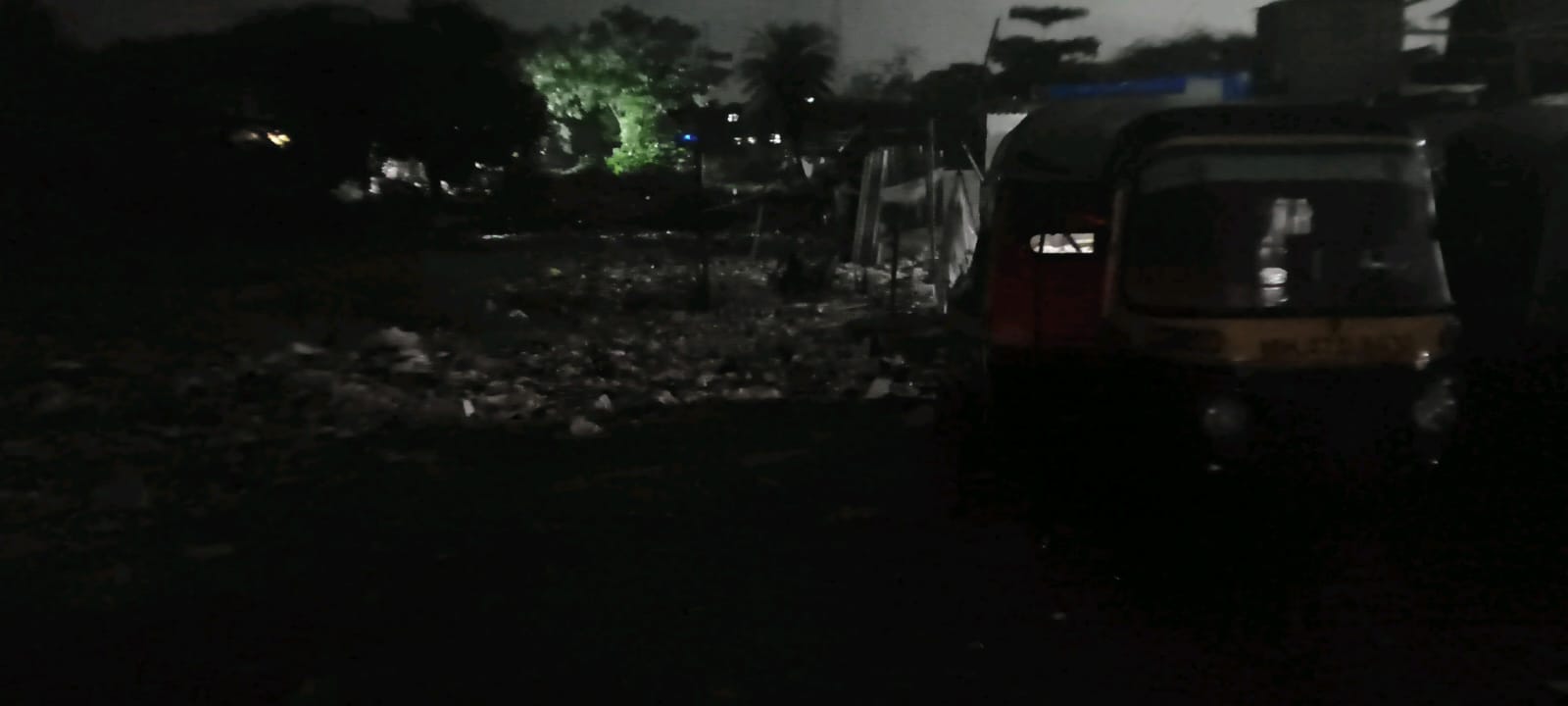
During the monsoon, the situation became even more difficult. Water would collect in several lanes, and navigating these waterlogged areas in the dark was extremely risky, making residents fearful.
The struggle for electricity did not move in a straight line. There were times when progress was actively blocked. Informal power brokers and local interests resisted full electrification, fearing that proper services would end their control and income sources.
Large-scale demolitions further disrupted electricity access. Poles, wires, and temporary arrangements were removed along with homes. Each demolition pushed the community back into darkness, forcing residents to start their struggle again from the beginning.
By around 2014, most households in Ambujwadi finally had electricity connections inside their homes. This was a significant milestone. However, roads, lanes, and corners remained dark, as street lights were still missing. This made it difficult for workers returning at night, as well as women, children, and elderly residents, to move around safely.
The Role of Mohalla Samitis and Social Audits
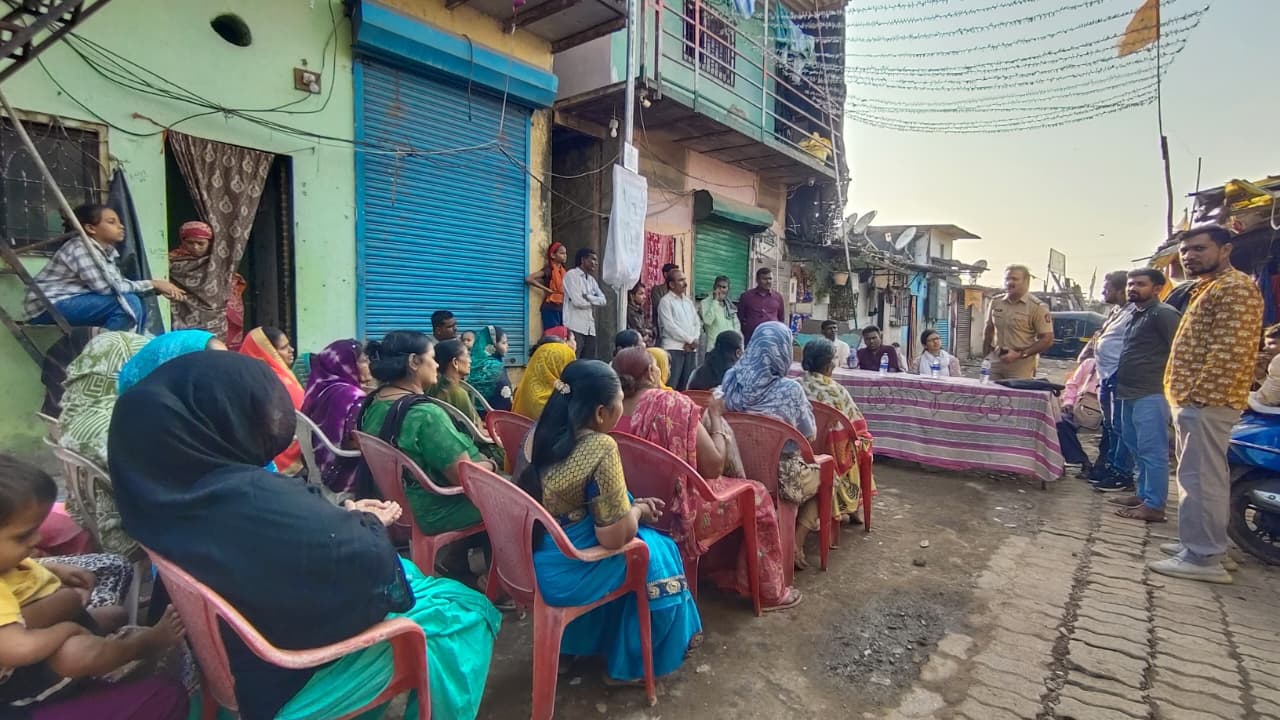
For several years, YUVA has been working in Ambujwadi to build Mohalla Samitis as local platforms where residents can come together, discuss common issues, and engage with systems of governance. These committees bring together women, youth, children, and other residents from small clusters within the settlement. The idea behind this is that when people organise locally, they are better able to raise concerns, understand processes, and follow up on basic services that affect daily life.
Over time, Mohalla Samitis in Ambujwadi have taken up many everyday infrastructure issues such as water supply, sanitation, waste management, and safety in public spaces. Street lighting emerged as one such concern, especially in lanes and corners that remained dark after sunset, as this affected how residents felt using public spaces every day.
The issue of poor lighting came up repeatedly through social audits conducted with support from YUVA. These audits involved walking through the basti with residents and asking simple questions about where they felt unsafe and why. Women and children pointed to narrow internal lanes, corners near public toilets, four-way junctions, and routes used after dark. They also shared that, apart from the two main roads leading to Moiniya Masjid and Ambedkar Chowk, most internal lanes did not have any street lights.
These findings were discussed in Mohalla Samiti meetings and raised with local authorities at the BMC through round-table conferences. While a few street lights were installed on main roads, internal lanes continued to be neglected. Over time, the community realised it would need to identify priority locations and take the lead to ensure the work moved forward.
When YUVA began planning the installation of solar-powered street lights, Mohalla Samitis played a key role at every step. Samiti members joined site visits, helped confirm the locations that needed attention, identified through social audits and discussions, and spoke to residents living nearby. In areas where Mohalla Samitis were active, they agreed to take responsibility for the lights. In other locations, society representatives were consulted and brought into the process.
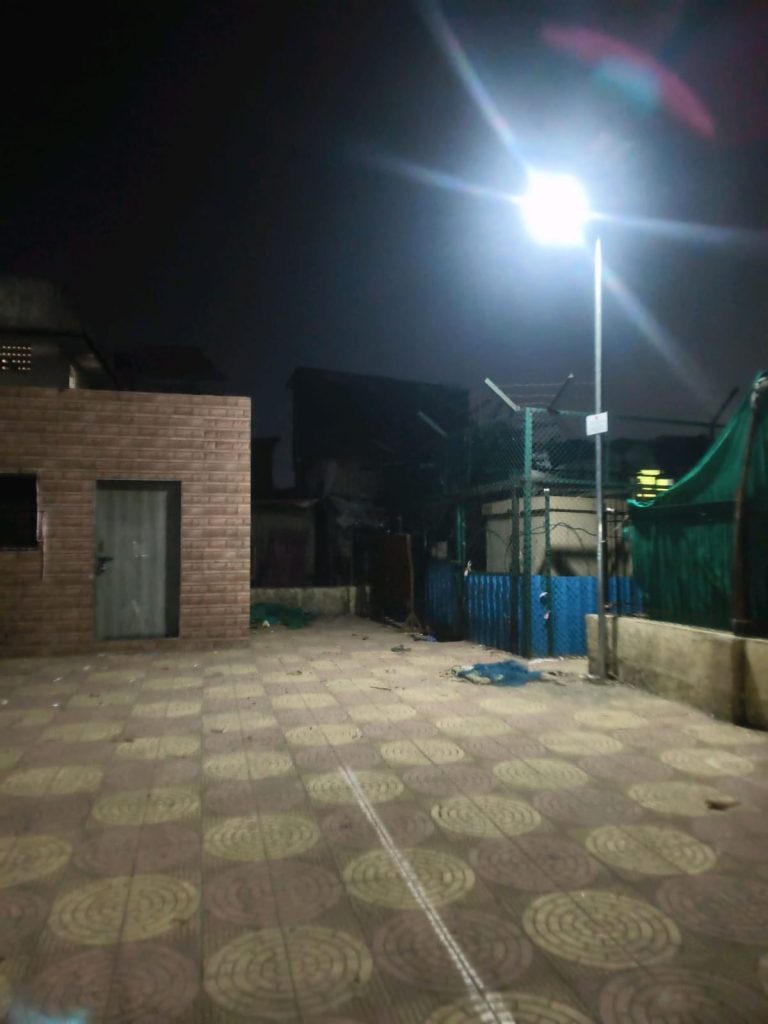
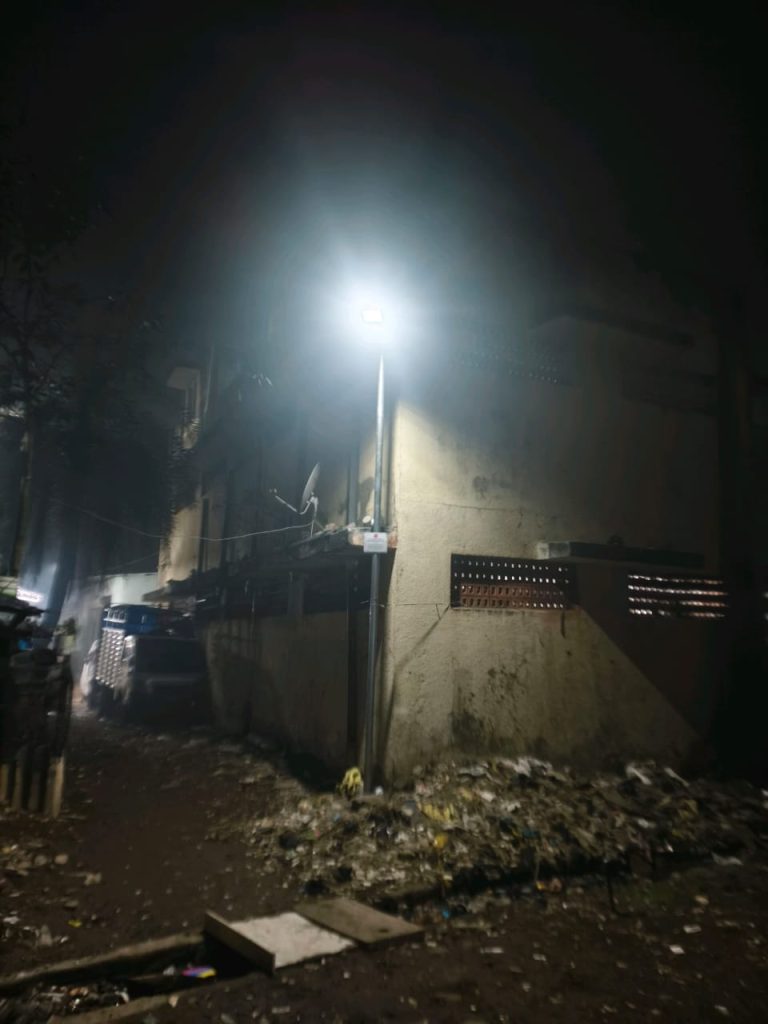
Based on this collective process, 28 solar street lights were installed at locations chosen by residents themselves. Today, these lanes are well-lit, making it easier to move around after sunset.
This process shows how community participation, through Mohalla Samitis and social audits, can turn everyday concerns into meaningful action, based on local knowledge and shared responsibility.
Sustainability and Responsibility
The responsibility for maintaining these street lights will lie with the mohalla committees and housing societies. In addition, the company supplying the solar lights provides a two-year warranty, during which they will be responsible for regular maintenance and addressing any technical issues that may arise. This approach aims to ensure that the lights remain functional and continue to serve the community effectively.
Looking at Ambujwadi before and after the installation of these street lights shows how much this change has mattered in everyday life.
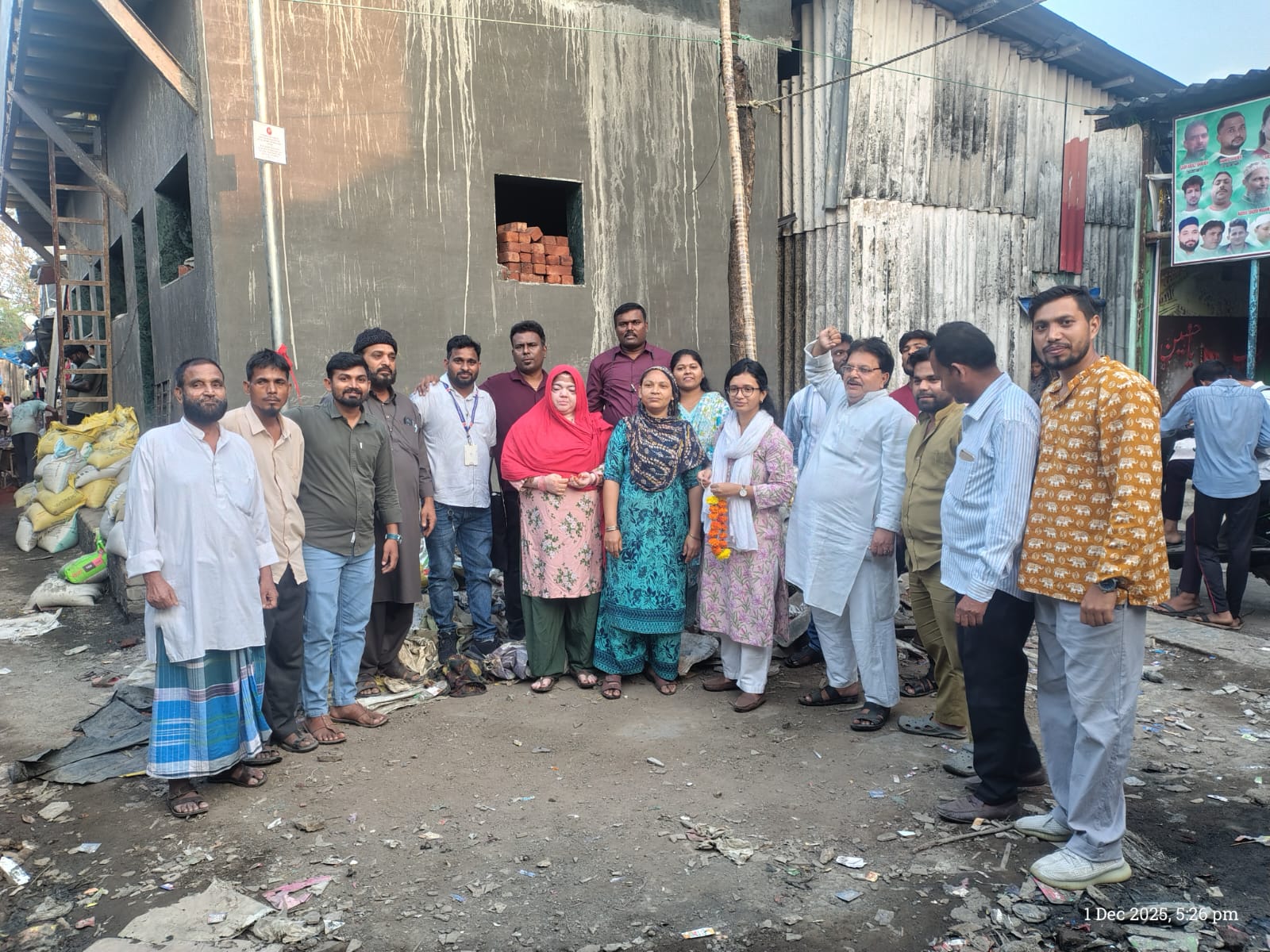
Here are some pictures showing the results after the installation of street lights in Ambujwadi:
More Than Just Street Lights
For many residents, the change brought by street lighting is felt in small, everyday moments. A woman from Ambujwadi shared,
“पहले शाम होते ही बाहर निकलने में डर लगता था। अब लाइट होने से रास्ता साफ़ दिखता है और बाहर निकलना आसान हो गया है।”
For her, and many others, the lights have made it easier to move around after sunset.
From YUVA’s perspective, the street lights reflect something larger than infrastructure. They show how community participation, through Mohalla Samitis and social audits, can help residents raise concerns, identify priorities, and stay involved through each step of the process. Mohalla Samitis played a key role in pointing out where lights were needed, coordinating with authorities, supporting the installation process, and taking responsibility for ongoing maintenance.
The street lights in Ambujwadi are part of a wider effort to strengthen community-led processes. They demonstrate how local participation can improve access not just to lighting, but to many essential services over time. Ambujwadi’s experience shows that lasting change becomes possible when residents are involved, their knowledge and experiences are respected, and solutions are built together.
Resources & References: