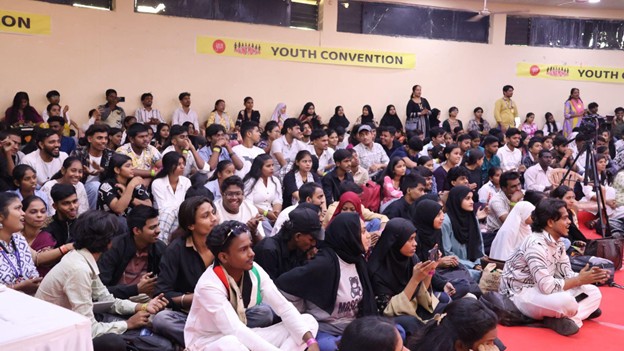
What happens when over 350 young people come together to reflect on peace and the city?
Thoughtful conversations, creative expression, and meaningful engagement on building a more inclusive and peaceful city is likely to follow. The Youth Convention 2025 was curated to bring this collective energy together creating space for dialogue, learning, and youth-led action.
A Thoughtful Beginning
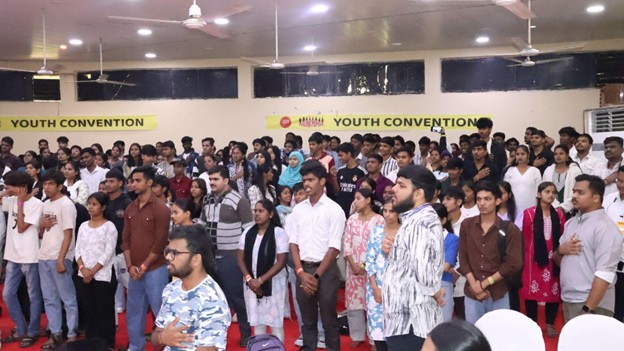
The convention opened with a collective reading of the Preamble of the Indian Constitution, grounding the day in shared values. A short ComplexCity film followed, showcasing youth-led initiatives across Mumbai. The session also introduced ComplexCity as a long-term platform for youth engagement beyond events.
Panel Discussion : Unity in Action
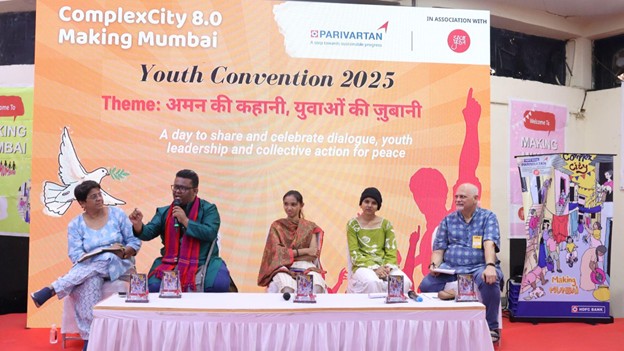
Moderated by Minar Pimple, Founder, YUVA, the panel explored two key questions: “What values and practices help sustain peace?” and “How can we practise unity in our communities?”
Panelists Haseena Khan (Bebak Collective), Vaibhavi Adhav (ASK Youth, Ichalkaranji), Kaivalya (ASK Youth, Nashik), and Akshara (ASK Youth, Malwani, Mumbai) shared perspectives from schools, campuses, and neighbourhoods. Vaibhavi works on youth education, gender equality, and constitutional awareness; Kaivalya brings insights from grassroots campaigns and student movements; Akshara contributes to community engagement and interfaith initiatives in Malwani.
Vaibhavi emphasised that youth are an integral part of society and that peace is built through small, everyday acts of solidarity. She shared examples of communities celebrating festivals like Eid and Raksha Bandhan together, highlighting how shared experiences can foster harmony.
Kaivalya spoke about consciously rejecting caste and religious divisions, stressing the importance of shared spaces where young people from diverse backgrounds can connect and collaborate.
Akshara described her neighbourhood in Malwani as a “mini India,” where trust, dialogue, and community engagement help diverse communities coexist. She illustrated how reclaiming public spaces and promoting interfaith interaction strengthens collective responsibility for harmony.
Haseena Khan concluded the panel by urging young people to remain aware of forces that try to divide communities, emphasising that real issues such as education, employment, and social security require collective attention. She reflected on the importance of empathy, dialogue, and cooperation as the foundations of lasting peace, noting that conflict alone does not create change. Drawing on examples from Mumbai’s neighbourhoods, she illustrated how ordinary people overcome differences through trust, collaboration, and shared responsibility. She encouraged participants to actively question, engage, and contribute to their communities, reminding them that youth are not just observers but active shapers of harmony, justice, and inclusive civic life.
Breakout Sessions: Hands-On Learning
The convention offered participants three focused breakout sessions, each designed to encourage reflection, dialogue, and practical learning.
Digital Safety and Media Awareness, facilitated by Vaibhav Chhaya, explored the value of personal data, the influence of AI, and the rapid spread of misinformation online. Participants asked questions such as: What happens to my data once it’s online? Can AI create fake news that is impossible to detect? How do we protect our privacy on social media? The discussion emphasised that online information can easily be manipulated, and that critical thinking, cross-checking sources, and careful management of one’s digital footprint are key to safer, informed engagement. Strategies for verifying information and responsibly using social media were shared, highlighting how digital literacy strengthens personal and community safety.
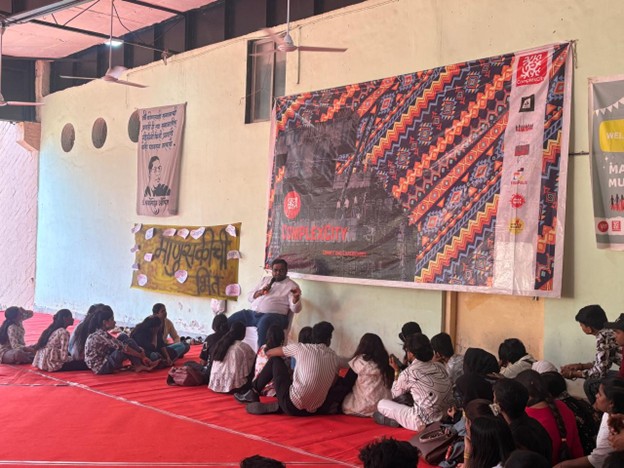
Unity in Diversity, led by Deepa Pawar, encouraged participants to reflect on peace in everyday contexts from homes and schools to neighbourhoods and workplaces. Questions raised included: Why do some communities face more discrimination? How can young people safely intervene when they see injustice? What does it really mean to feel safe in a neighbourhood? The session emphasised that peace is an active practice, built on emotional balance, mutual respect, and collective responsibility. Real-life examples, such as access to water and dignity in local settlements, illustrated how inequalities and systemic issues affect daily life, and how dialogue, trust, and supportive relationships can help build safer, inclusive communities. Women’s safety, managing stress, and creating supportive spaces were also highlighted as central to fostering peace.
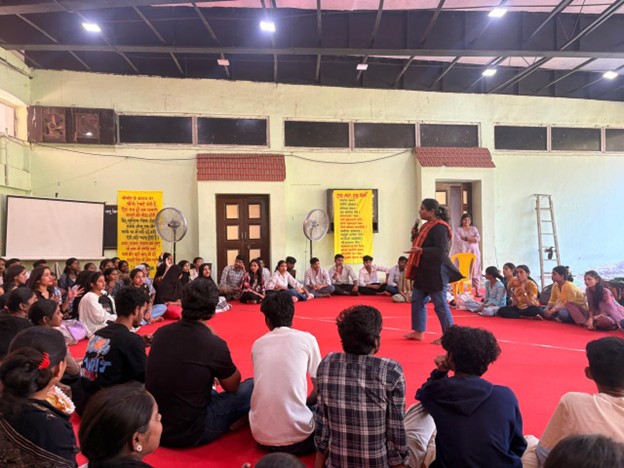
City of Peace: Understanding the Constitution, facilitated by Krutarth, delved into the Indian Constitution and the Preamble. Participants asked: How can we ensure our local authorities respect fundamental rights? What are practical ways to uphold the Constitution in schools and communities? How do we act when our rights are ignored? The session explained constitutional principles such as justice, liberty, equality, and fundamental rights, and explored practical ways to apply these values in daily life. Participants discussed how to engage with governance, community initiatives, and peer networks to uphold these rights, reinforcing the idea that youth can be active shapers of a fair, inclusive city.
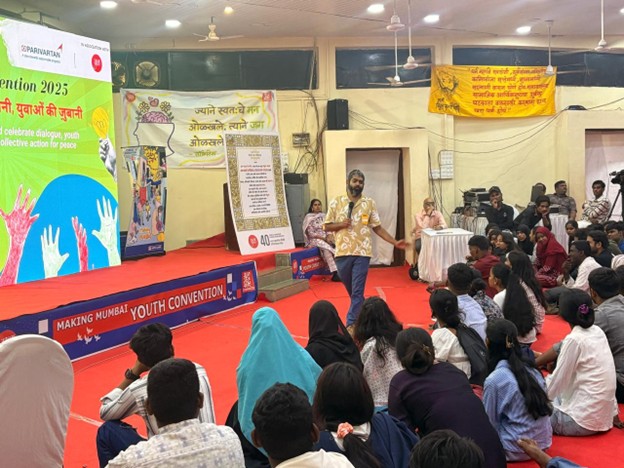
Cultural Expressions and Creative Voices
Cultural expressions formed an important part of the convention, with young people presenting street plays, dance performances, and other creative acts. These performances highlighted themes of diversity, unity, and peaceful coexistence, drawing from everyday experiences in the city. Through movement, storytelling, and collective performance, youth shared messages of inclusion and togetherness, showing how art can open conversations and strengthen community bonds.
Wrapping Up and Moving Forward
The convention made one thing clear: young people are active contributors to the city’s harmony. By combining fun, reflection, and practical learning, the Youth Convention 2025 showed how peace, understanding, and community care can be practised every day. Participants left with new insights, tools, and connections to continue building inclusive, supportive urban spaces.
Resources & References: